
September 2026
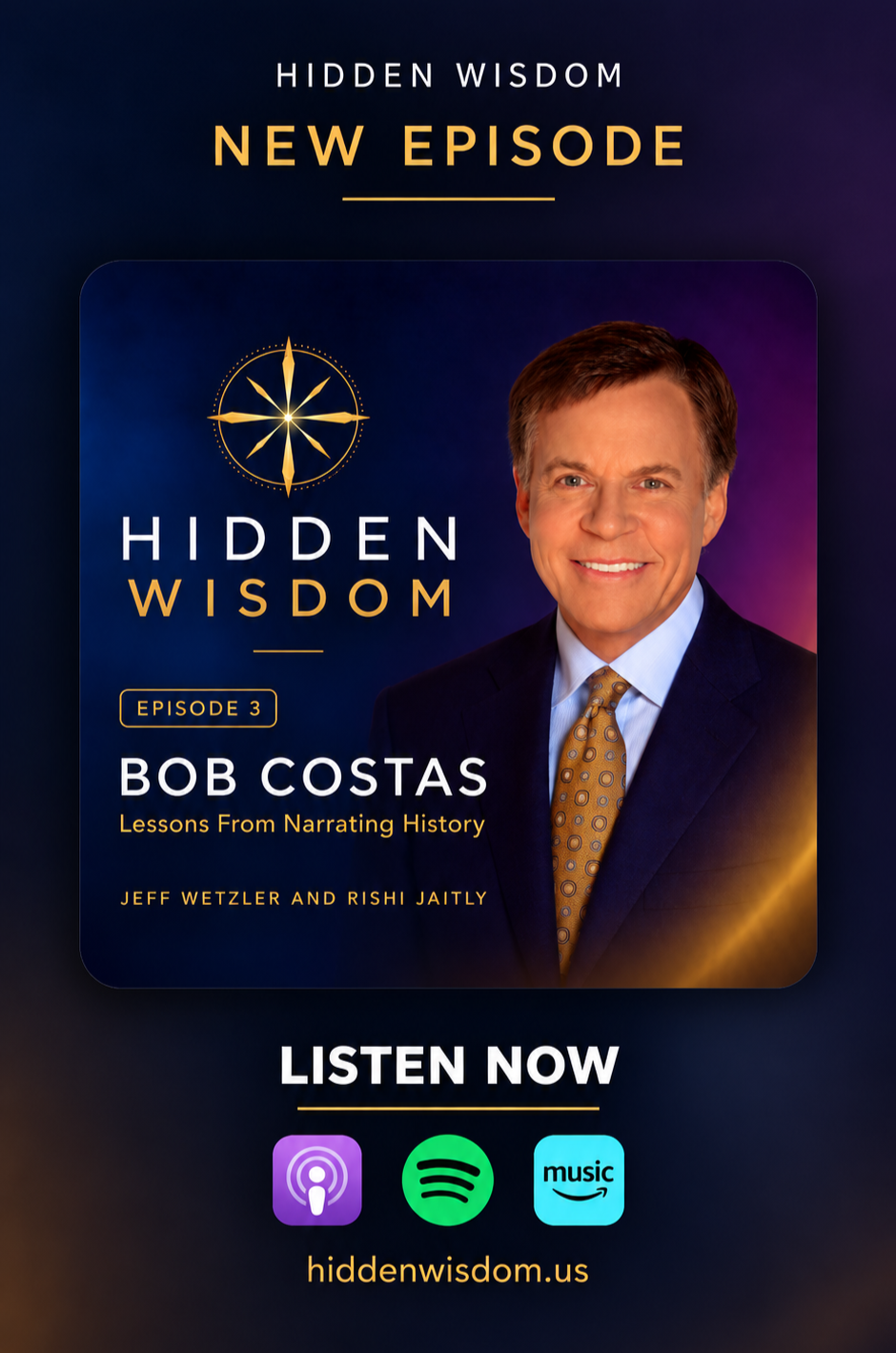
In the latest episode of Hidden Wisdom, Rishi Jaitly and I sat down with Bob Costas, whose voice has narrated some of sports' most memorable moments. We went deep on everything from his broadcasting heroes to his challenging childhood, but underneath it all was a lesson about curiosity.
Bob told us that whenever he prepared for an interview, no matter how well he knew someone, he looked for "another 10% that I didn't already know."
That habit is rarer than it sounds. The biggest obstacle to learning from other people is the feeling that we already have the full picture: we know what our colleague thinks, what the customer wants, how the boss will react.
In Ask, I call this the Certainty Loop. The more sure we are, the less we notice anything that might change our minds, and so the less we ask.
Bob works from the opposite assumption: there's always at least 10% more to find out, and it's often the part that matters most.
The 10% idea ran through almost everything Bob told us. He described a tension at the center of every good interview. He prepares enormously, and then, once the conversation starts, he has to be willing to abandon it all. He never knows what the answer will be or whether it will call for a challenge or a follow-up.
"You got to be prepared, but not so prepared that you're all buttoned up. You got to be nimble."
Preparation can make us more or less curious, depending on what we do with it. Staying open to what surprises us in the moment makes us better listeners. And the best question you ask is probably not the one you came in with.
We also learned that much of Bob’s curiosity stems from his own childhood. He vulnerably shared some very tough experiences from his growing up, which led him to realize that "everybody's life story, or what's beneath the surface, is not revealed by what's on the surface."
Hearing him describe his early life, I began to understand that his curiosity about people started long before he ever held a microphone.
Bob also shared with us that he’s occasionally been criticized for “talking down” to his audience because he goes beyond the soundbites to tell the full story in all its complexity. But Bob sees it differently: he respects his viewers’ intelligence enough to assume that they can handle nuance and context.
This made me think about how often we make the opposite bet in our own conversations.
When we underestimate someone, we keep our questions shallow, skip the ones we think we already know the answer to, and rush to fill a silence that a few more seconds might have turned into something.
It's one reason we teach WAIT, short for "Why Am I Talking?" Some of the most important things people tell us come in the few seconds after we'd normally have jumped in.
Bob's remarkable career makes a long case for giving people more credit and assuming there's more there.
I’ll admit I never grew up watching or knowing much about sports, so I wasn’t sure what to expect from this conversation with Bob. But I walked out truly moved by him, not just as a curious and powerful storyteller but as a remarkably wise human. I hope you’ll listen to the full conversation with Bob Costas on Hidden Wisdom.
Keep asking,
Jeff